Sunday, November 21, 2010

Living Like a Spaniard

Mountains outside Alicante
The Calpe W

        We left Ronda and traveled six hours to the coast. The scenery changed--often times becoming the bland rolling plains similar to central Spain. At the coast, things changed. Jagged, bare mountains rose to the left of us, the Mediterranean rolled out to the right.                                            Calpe. Located on the Costa Blanca is landmarked by the giant Pinon Ifach--a Gibraltareque rock rising from the Mediterranean. Two sandy beach curve away from Ifach's peninsula creating a geographic W. Once explored, Calpe doesn't offer anything too exotic.
      We walked the beach. Daily we visited grocery stores--Spain has many on every few blocks as all the refrigerators we'd seen were tiny, apartment sized appliances. Our top floor apartment offered stunning views of the sea and the fishing fleets and the beaches, but we had no TV or radio, no Internet. We had each other and quietness.
      As we neared the end of week two, the desire to return home beset us. As Americans--and me--as a DeFord--we were used to going all the time. Used to rushing through lines, grabbing our "sippy" cups of coffee or coke and getting it done.
     Throughout Spain, if you took a cup of coffee it was served in a ceramic cup meant to be drunk in the establishment that sold it. If you nursed it for hours, that was okay. You had time. Time was free. Enjoy it.
     Somehow I slowed down. I found myself sitting at Spasso's, a seaside cafe, nestled in a leather chair. For a euro, I'd order my coffee (no refills), use their free wifi and enjoy "human" contact, sea breezes and sunshine.
     Slowing down, enjoying life, and appreciating my own person circumstances became three Spanish characteristics I don't want to lose.
Enhanced by Zemanta

Tuesday, November 16, 2010

Standing Upon the Rock

     As my ship glided past in the night, I strained to see the mighty British rock guarding the entrance to the Mediterranean. Darkness swallowed it and we sailed on to Cadiz. This time in Spain, I would not only see Gibraltar, or Gib as the locals affectionately call it, I would climb it.

First commercial Iberia flight lands at GibraltarImage via Wikipedia     A chance to speak English and the evocative power of the Rock of Gibraltar drew us to the tiny British outpost. The town itself crowds itself on the western slope of the giant rock. To get in, we had to go through British customs--more a formality than an actual inspection. We then walked across the airport landing strip and entered the town.
A can of Coca-Cola Light coffeine free.Image via Wikipedia     We took a cable car to the top. Here we stopped of a can of Coca Cola light and walked out onto the patio to catch a glimpse of the formidable rock. The sign out of the cafeteria said no food was allowed beyond that point. Of course that referred to food--not our drink. I brought my freshly opened, expensive can of Coke out onto the patio and placed it on the binoculars pedestal and pointed my camera.
     Before I realized it, a Barbary ape with her baby snatched my soda, ran to a clear space in the middle and took a sip. It turned out she didn't like Diet Coke and left the can and me not knowing if I should laugh or scream at losing my soda.  Didn't those apes know they were supposed to be living halfway down the mountain?
     The views were breathtaking. Neil and I explored the top, walked down, saw hundreds of apes and incredible views. We walked and walked and walked and walked. Came to a dead end, backtracked and walked some more.
     At Casemates Square we ate fish and chips, then wandered back across the landing strip and back into Spain. A delightful, British day.


Enhanced by Zemanta

Tuesday, November 9, 2010

El Castillo de los Reyes Christianos

             The ILT (AKA GPS) got us to Córdoba fine. It’s very good with its gross motor skills. However, once there, it took us down "streets" that made the roadways of Arriate look huge. The tires of our tiny Clio scrubbed the curbs of these two way streets.
            We found a parking spot—somehow with few problems once we got to the real roadways and set off to find the Mezquita. I asked—people told me to walk through the arcos, turn derecho or derecha—two distinctly different meanings and voilà. Or I should say hay usted.
            We wandered through arcos and little streets and asked once more.
            “Vaya por los arcos…”
Those words were spoken at the speed of light, so I understood only the hands. I have learned the language of hands well.
We walked through another arch, and before us spread what I thought was the Mesquita. It cost less to enter than guidebook said the Mezquita should and it certainly didn’t match the descriptions.
Had we seen the Castle after the grand cathedral of Córdoba, I would have thoroughly enjoyed every square inch and lingered throughout the afternoon—but anxiousness to see the former mosque took away the glory of this old castle.
A fortress, today almost a perfect square, had sat here since Roman times—and it grew to serve the purpose of various dynasties. Its final design settled in 1327 under the reign of Alfonso XI.  However, the gardens demonstrate the Arab influence. They reminded me of the Alhambra, only more impeccably maintained. Ponds and fountains, flowers and trees, all made this an exquisite experience—one not to miss.


Enhanced by Zemanta

Friday, November 5, 2010

Córdoba—Introducing the Mezquita


             Leaving the mountains of Andalucía, we found the first “wetlands” of our trip. The land leveled out and the city of Córdoba rose before us. Here we visited two magnificent buildings: the Mezquita and Le Castillo des Reyos Cristianos (The Castle of Christian Kings).
            The Mezquita—no picture we have can do this justice. It was a church in Visigoth times, turned into a mosque and returned to a cathedral. When you enter the cathedral, 850 red and blue columns surround you, a visual forest—too dark and too grand to capture in a photograph. At one time, archways opened to the Patio de los Naranjos let light pour in. When made into a cathedral, beautiful windows filled in the archway.
            In the far corner (facing south, which is unusual) is the Mihrab, the mosque equivalent of a high altar. Muslims faced the Mihrab, a fixture in all mosques, to worship. Ornate as all Arabic architecture, the photograph doesn’t capture the beauty of three thousand pounds of glass and enamel decorate it.
            In the center of the room, sixteen columns were removed to make a chapel, fronted by the Royal Chapel—a burial place for kings—never opened to the public. However, Córdoba was kind, and the chapel is not entirely walled off. The dome and the walls can be glimpsed—stunning.
            In the Tesoro (Treasury) is a HUGE monstrance—the Christians wanted something glorious enough to hold the body of Christ. During the Feast of Corpus Christi, sixty days after Easter, they still parade this through the town.
            Then we come to the Cathedral itself. Glorious in gold and silver and carved mahogany.
            España—muy guapa.
           
Enhanced by Zemanta

Friday, October 29, 2010

Ronda-

            Set in the heart of Andalucía, in the beautiful Serranía de Ronda mountains. Its gorge—El Tajo—is a 360 foot drop of breathtaking beauty. The New Bridge (Puento Nuevo) was built in 1751 and still supports cars and tourists and still displays the glory of this countryside.
View from Puento Nuevo
            After walking over the bridge, I travelled down to the bottom of the gorge along a dirt path with no guard rails to the Jardines de Cuenca—a feat unacceptable in the US. Worth every breathtaking step (literally). Stunning.
Puento Nuevo from the Jardines de Cuenco
            In Moorish town, behind tiny (two way) streets that barely fit one mini European car, lay the city walls. Walking through arches and down cobbled steps, we arrived at the Arab baths. These were well preserved—used during Arab occupation for hygiene as well as socialization. From here, you can get a faboulous view of the old bridge (a relative term)—also still in use.
The Bullring
            The bullring, a quarter of a mile down the road, birthed the “art” of bullfighting in Spain. It originated as a training grounds for soldiers and has developed into an art form. The fight takes place in three acts: the first is a parade, the second a lot of fancy tricks by the matador, the third features the kill. And the kill is barbaric. Picadors pick the bull with darts to “drain” the stress of the journey and the matador, with a curved blade, must stab the bull in the precise spot to kill it instantly. In Ronda, only one bullfighter died in the ring and his remains were buried there.
Enhanced by Zemanta

LOST (Part 2)

            …So we unloaded the few little things we had in our Hobbit room (except it was up and not down). It had to be no more that 15’x15’ with a king sized bed. I felt like Alice when she grew too big. We then began our search for our car.
            Neil swore he’d find it. Remember, it was buried in a garage somewhere in Madrid—but we really only had about a kilometer radius to search. I’m not sure who was the silliest—Neil for saying he could find the car when he gets lost in Plattsburgh, or me—for believing him. I guess desperate minds believe anything.
            We crossed the bridge with no problems. But then—all the roads here fan out from traffic circles. I think we had four choices. I followed Neil up one. About a quarter of a mile up he said, “This isn’t right. I think it’s the other.”
            We walked up that one—again a quarter mile. This road had wrought iron fences like the one where we parked the car. But again—the wrong road. Back we trudged and then up a third, then back, then peaked down the fourth—obviously wrong.
            We started the process all over. Finally we took a little road along the “river.’ (They appear to be not much more than evaporating creeks). Little things began to look familiar—a bench, the park along the river, we turned up a side road because of obstructions and what did I spy? The wrought iron fences.
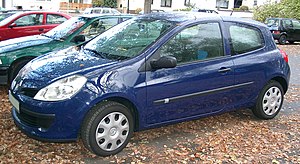
Renault ClioImage via Wikipedia            Two more streets and the cervasaceria we stopped at came into view. We turned back down the road and there stood our garage. We scurried in, found our itty-bitty Clio and drove to the hotel.
            Our twenty-five minute trip lasted over three hours.
            Now all we had to do was figure out how to turn the lights on in our room. (Or how to use a bidet—what use are they?)
Enhanced by Zemanta

Wednesday, October 27, 2010

LOST (Madrid Style)

            It was an omen. After four hours trying to get a Blackberry set up for our overseas adventure, as I sat in the airport in NYC, I couldn’t make a phone call. As I waited for my plane, I decided to call my mother and tell her how easy it would be for her when she joined us in Spain. The call wouldn’t go through. If it didn’t work here, how could it in Europe?
            I took a deep breath and decided to act grown-up about it (and you know how well I do that). After an uneventful and sleepless flight we descended to Madrid. With our landing, the European attitude descended upon me. Calmly, with patience, I passed through customs, presenting the entrance paper filled out on the plane. The custom’s official handed back the receipt—one I needed to present upon returning—the one that couldn’t be lost. I tucked it into my passport. And yes—but you’re getting ahead of the story.
            We picked up our bags, decided to change some, not all our money—mistake two. Got our car and a GPS which should more accurately be named ILT (I’m Lost, Too). Thus ended the well-planned version of our trip.Night view from the Gran Vía, a downtown avenu...Image via Wikipedia
GPS navigation solution running on a smartphon...Image via Wikipedia            We decided to drive south from Madrid because we had a seven hour layover in the airport—we could drive faster. We’d stay in a hotel whose name we couldn’t pronounce. It was located a mere twenty-five minutes from the airport, and we’d walk about a bit to get the feel of this foreign capital, find a restaurant and enjoy.
           "ILT" didn’t know where the hotel was. She directed us through the city all right, brought us to a road just minutes from our destination, then sent us into a tunnel.
            And the tunnel went on and on and on and on. And on. (It was a LONG one).
Once back in daylight, wandering crowded streets with no names posted, with directions in spewed out in meters, “ILT” wended us through the shoppers and tourists and Madrilejos, back onto a major road, and somehow back into the same tunnel.
We took a different exit from the tunnel, wended other unfamiliar streets, took a side road, a quick exit onto another road and…yep. The tunnel.
I think we hit that thing four times. Each time, as we entered, the "ILT" told us we would be at our destination in one more minute. It would display the little checkered flag announcing our arrival just as daylight disappeared from the tunnel and we lost satellite reception.
Finally out once more, we took fate into our own hands. We were near our hotel (albeit in two hours rather than twenty-five minutes). We found a garage. Parked. Neil, who did all the driving—(thank you, Jesus)—wanted to take a cab.
We found a Cervaceria, got a Coke, took a bathroom break and asked directions.
And can Spaniards speak fast! The waitress drew directions on a napkin. Somehow we figured she said we could walk faster than we could drive. And I understood next to nothing.
I should say nothing. I couldn’t even follow her directions on the napkin.
We took a cab.
And in two minutes we arrived at the hotel. Neil assured me he could find the rented car, parked in an underground garage, on an unnamed street somewhere in Madrid.
And I found that believable.
Enhanced by Zemanta